

Is Preschool the New Neighborhood?
How Preschool Builds Community for Children and Families
There is definitely something to admire about the one-room schoolhouse concept of long ago. It occupied a special place during pioneer days, when families needed to gather children under one central roof to learn their ABCs and 123s. As these small buildings multiplied in the early 1900s, they provided places for multi-age education to take place while also serving as important social centers for small but growing communities.
Today, the idea of schools as places for people of all ages to come together, learn, and build community is on our minds once again as we search for connection and compatibility. The desire to shore each other up is alive and well in New York City, particularly in preschools, where families connect with teachers, the learning process, and each other in settings that recall the one-room schoolhouse, not physically, but in their ability to bring a community together.
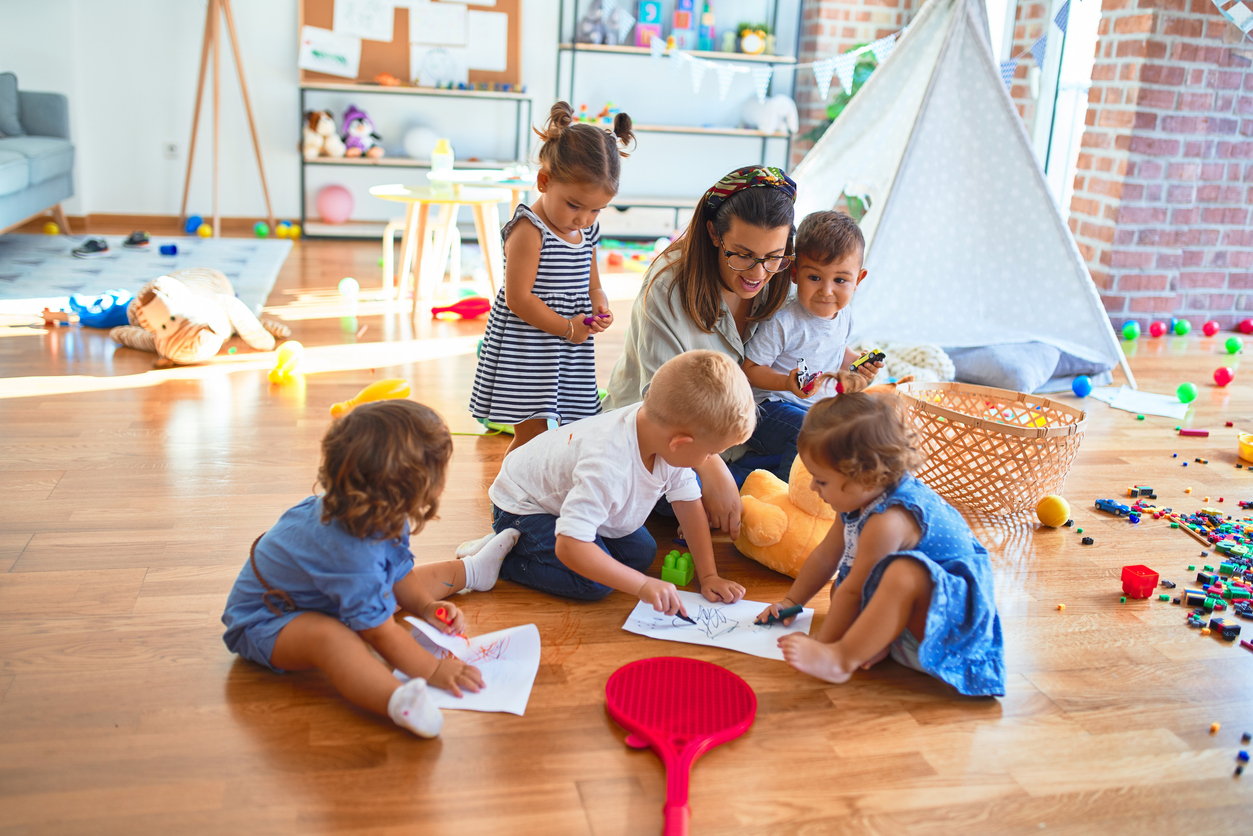
For many families, preschool becomes more than a place where a young child learns. It can become a community where children develop a sense of belonging, parents form relationships, and families find opportunities to connect and support one another.
When children are assigned a first-ever classroom, it generates excitement and anticipation about the school days ahead. It also brings together people who automatically share something in common: parents who have selected the same preschool for their children as you have for yours.
This is a built-in community, you realize, as you begin to appreciate all of the growing and learning happening at the same moment and in the same space. Preschool can offer children and their families a welcoming sense of belonging, sharing, and caring.
Like a neighborhood community, a school is designed to connect people and lend a hand so everyone can thrive and flourish, especially young children. Some neighborhoods, like schools, are purpose-built, committing to and focusing on well-being, safety, security, and trust to benefit all. By coming together, we recognize what makes each of us unique while discovering what connects us.
So how can families use their voices, strengthen their bonds, and find opportunities to create kinship with others? It begins by entering a school setting and being in the moment, with a smile and a willingness to understand the needs of others. By starting in preschool and continuing through the school years, families have opportunities to participate in and contribute to each new community they encounter along the way.
Coming Together for Education: Getting Involved in Your Preschool Community
As a member of a preschool community, there is an open invitation to be involved and participate in activities that support the mission and responsibilities of the school. A welcoming early childhood setting offers parents and caregivers the chance to model the importance of reaching out, and looking out, for each other, especially children.
Parent involvement can take many forms, from attending school events and getting to know teachers and other families to volunteering, sharing ideas, and participating in school traditions. Each interaction can help strengthen the relationships that turn a school into a community.
Coming Together to Support Preschool Families
Noticing what community members have in common, as well as celebrating what is different, is guidepost number one in building relationships. It is a subtle principle in many preschool classrooms and a gently philosophical, and greatly appreciated, way to learn.
For young children, these early experiences can introduce the idea that they are part of something larger than themselves. For parents, the preschool years can create opportunities to develop relationships with other families who are navigating many of the same stages, questions, celebrations, and challenges.
Coming Together to Strengthen the School Community
Though school programs and educational philosophies may vary through the years, some principles never waver. When your child is part of a community that values belonging, respect, trust, and care for others, it is an opportunity for families to participate in and help strengthen what is already in place.
Being part of a preschool community does not necessarily require a major commitment. Small actions matter. Showing up, getting to know other families, supporting teachers and school events, welcoming a new parent, or simply starting a conversation can contribute to a stronger sense of connection.
Coming Together to Build Community for the Future
To commit to the future needs of our school and community spaces is to inspire others to believe and belong. Community building is in everyone’s interest, and each generation of families has an opportunity to pay it forward.
Whether in a one-room schoolhouse of the past, a preschool classroom today, or the learning spaces of tomorrow, education has the power to bring people together. For children and parents alike, preschool can be the beginning not only of a school journey, but of a community.
Why Is Community Important in Preschool?
A strong preschool community can help young children develop a sense of belonging while giving families opportunities to connect with teachers, other parents, and the school itself. These relationships can create an environment built around trust, communication, support, and a shared commitment to children.
How Can Parents Get Involved in a Preschool Community?
Parents and caregivers can become involved by attending school events, communicating with teachers, getting to know other families, volunteering when possible, and participating in school traditions and activities. Even small interactions can help families feel more connected to their child’s preschool experience.
How Does Preschool Help Families Build Connections?
Preschool naturally brings together families with children at similar stages of development. As children learn and grow alongside one another, parents have opportunities to form relationships, exchange experiences, support one another, and develop a sense of belonging within the larger school community.
About the Author
Ann Levine’s love of books, words, and reading has steered her career choices: from editorial roles at Meredith Publishing and Hearst Magazines to teaching and administrative positions at the School at Columbia and Preschool of America to assistant manager at Bank Street Bookstore. She received an undergraduate degree in English at Washington University and a graduate degree at Bank Street College of Education. She is still a big believer in the three Rs of learning — reading, reading, and reading.


Recommended Reading
-
Best Summer Reading Books for Kids
Ann Levine, Parents League School AdvisorDip a big toe into the endless selection of shimmery, summery books, many of them hinting at care, use, and…
Read more
-
Activities for learning about springtime
Here are ways to encourage children to notice the growth and change taking place all around them.
Read more
-
A Flexible Timeline for NYC Preschool Admissions
Ann Levine, PLNY School AdvisorWhen Should You Start Thinking About Preschool? There’s no single “right” moment, but there are helpful guideposts based on your…
Read more