

7 Ways to Celebrate National Poetry Month with Kids at Home
“Butterfly in the sky. I can go twice as high. Take a look. It’s in a book.” These lines, first heard (both recited and sung!) in 1983, helped launch “Reading Rainbow,” a PBS series determined to support and encourage a love of reading at a young age. It is a lasting example of a simple, meaningful, easy-to-remember rhyme that stays with us, inspiring kids to enjoy the beauty and wonder of poetic word play.
Things have changed a lot since then, including the creation of National Poetry Month in 1996 and the reboot of “Reading Rainbow” in 2025. But the need to steer young readers to books, poems, and stories remains the same. These literacy “tools” continue to be foundational to learning all year, every year, but April is especially important because it celebrates poetry by introducing phrases, verses, passages, sentences, thoughts, and ideas expressed in rhyming words, nonsense words, and flights of fancy to be read and appreciated alone or aloud.
Just as lullabies are longstanding traditions shared with babies at the earliest age, so too are Mother Goose and other nursery rhymes. Like “take a look, it’s in a book,” which can be recited with ease, “hickory, dickory, dock,” “hey, diddle, diddle,” and “baa, baa, black sheep,” easily spring to mind for children and adults, proving language a most entertaining way to hear, process, and understand word meanings.
Here are seven easy ways to celebrate National Poetry Month at home with children, from poetry walks to poet-teas:
Match Poems to Your Child’s Favorite Topics
Think about your child’s favorite loves (sports, dinosaurs, sea creatures, nature), then search for poems that match a special interest. The Poetry Foundation is a good place to start. And, of course, your local public library.
Create Poetry With Magnetic Tiles, Sidewalk Chalk, and a Poet-Tree
Break out that box of magnetic word tiles probably tucked away in a desk drawer and use them to craft poems, rhymes, and haikus. And speaking of things hiding somewhere in your house, find your bucket of sidewalk chalk and make good use of it to create poems for all who look up, down, and all around as they walk through their day.
Another attention grabber is a poet-tree with “ornaments” that are actually poems hanging from branches just waiting to be discovered and enjoyed in a backyard or park. Doug Florian’s “Poetrees” is a book filled with both trees and wonderful word play.
Read Poetry Aloud Together After Dinner
Instead of pulling out cell phones after dinner dishes are done, consider reading aloud from a poetry book. Besides compendiums like “Random House Book of Poetry,” “A Child’s Garden of Verses,” or “Poetry for Kids: Robert Frost,” this one is specially written for two or more shared voices: “Joyful Noise” by Paul Fleischman.
Explore the Masters: Seuss, Silverstein, Nash, and More
Several word pranksters stand out as deans of poetry for both children and grownups, including Dr. Seuss, Ogden Nash, Shel Silverstein, and e. e. cummings. And then there are artists such as Eric Carle who illustrate poems with their signature whimsy to accompany lines of poetry written by others (“Animals, Animals” is a winning example).
Print a Poem a Day to Share With Someone
To consider special poems every day this month, print one daily to tuck in your pocket and pull out several times to share with a friend, family member, teacher, or neighbor. These can come from the same book source (Maya Angelou’s “Life Doesn’t Frighten Me,” Eve Merriam’s “You Be Good and I’ll Be Night,” Nikki Giovanni’s “I Am Loved”) or can be found in poetry collections that might inspire a variety of new poetry slams and jams to create together.
Play a Poetry Guessing Game With the Whole Family
For those who love a good guessing game, ask gathered gamers to pull a famous line or phrase from a hat and read it aloud so participants can shout out the name of the poem (example: “went down a hill” should prompt “Jack and Jill”!).
Host a Poet-Tea With Snacks and Favorite Verses
A weekend afternoon might turn into a poet-tea if you prepare a tray with chamomile and crackers (goldfish, graham, Ritz, oyster) to snack on while enjoying a good reading.
However you choose to invite poetry into your life, let words and rhymes inspire you every spring when the reading rainbow forms an arc over us all.
—
What is National Poetry Month?
In 1996, the Academy of American Poets did something wonderfully simple: they claimed April as the official home of poetry in the United States. What began as an invitation to slow down and pay attention to the beauty of language has grown into the largest literary celebration in the world, observed every spring by schools, libraries, bookstores, publishers, and poetry lovers of all ages.
Each April, the Academy offers daily poems, reading lists, and resources designed to make verse feel less like homework and more like a gift. Canada celebrates its own Poetry Month in April too, which means that for thirty days each spring, an entire continent is leaning in a little closer to the music of words.
Ann Levine helps families define what they want in a preschool program and to understand the admissions process for private and independent schools. Her love of books, words, and reading has steered her career choices: from editorial roles at Meredith Publishing and Hearst Magazines to teaching and administrative positions at the School at Columbia and Preschool of America to assistant manager at Bank Street Bookstore. Ann is still a big believer in the three Rs of learning — reading, reading, and reading.



Recommended Reading
-
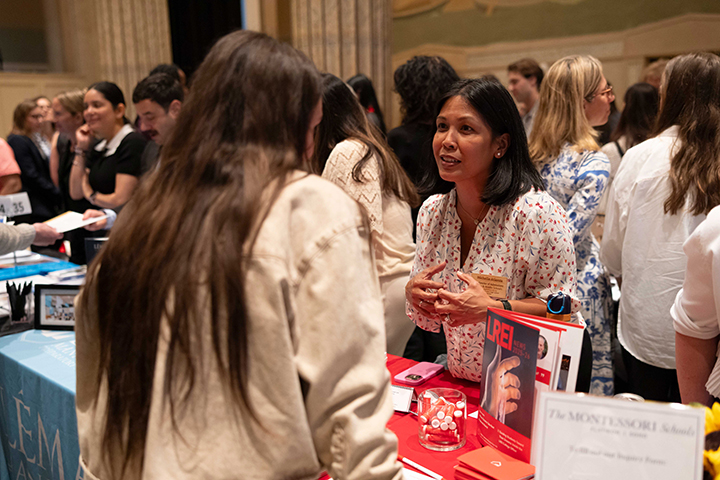
How to Prepare for a School Fair: A Guide for Parents and Students
Parents League School Advisory Service,Attending an independent, private, or boarding school fair can feel overwhelming, but it does not have to be. Learn how…
Read more
-

How to Prepare for School Admissions This Fall
Mary Ann Clerkin, Parents League School AdvisorAs the school admissions season gets underway, it's natural to feel a mix of excitement and uncertainty. Taking a few…
Read more
-

How to Find the Best-Fit Private School for Your Child
Ann Levine, Parents League School AdvisorWhatever you see as signs of your children’s strengths, interests, and skills, pay close attention.
Read more