


Fostering Healthy Social and Emotional Development Through Mindfulness
Ari E. Fox, LCSW-R
Francis Lora, LCSW-R, CFSW
Kate Mohan, LMSW, ACHP-SW
Angela Mora, LMSW
Karen Tsiroponas, LMSW
Cope With School NYC
Carl Jung, the eminent Swiss psychoanalyst wrote, “Your vision will become clear only when you look into your heart. Who looks outside, dreams. Who looks inside, awakens.” At present, we live in a time when we are being bombarded by a range of outside stimuli. Social media, the endless news cycle and intrusive pings from our electronic devices make inner reflection and self-awareness exceedingly difficult for children and parents alike. And, it seems, we are ever prone to negative self-comparison, catastrophizing and obsessive checking. Learning to look inward, while embracing the here and now, is essential in developing a healthy sense of self for people of all ages. One way parents can help nurture a positive identity and the ability to cope with life’s challenges is by teaching and practicing mindfulness.
Mindfulness is the practice of training oneself to be present in the moment. Through mindfulness both adults and children can gain a greater awareness of their thoughts, feelings, physical bodies and the environment around them. Learning to be present without judgment is a key component of building a healthy sense of self. While the basic concepts of mindfulness are the same no matter the age of the individual, the implementation and benefits vary greatly depending on a person’s developmental stage. By cultivating and modeling mindfulness practices early on, parents can help children of varying ages manage the ebbs and flows of life.
Mindfulness and preschoolers (ages 3 to 5)
So much learning and growth occurs between the ages of three and five! At this stage of development children learn how to separate from their parents, connect with their peers and to be part of a group. They also learn how to distinguish fantasy from reality and take care of their bodies. As young children integrate these lessons, they begin to view themselves as capable and independent. Their increasing knowledge of the world coupled with their growing understanding and mastery over themselves contributes to a confidence that is a joy to behold.
This, then, is the perfect time to introduce mindfulness practices to young ones. Learning how to focus and be aware of what is going on both in and outside of one’s body is a crucial component of mindfulness. As parents, we can foster growth in this area in several ways.
Notice your child’s actions as they relate to their various feelings and emotional ways of being. Does he hold your hand when fearful? Does she run away when overwhelmed by a surge of big feelings? You might say something like, “When that jackhammer started across the street, you put your hands over your ears and closed your eyes. Did that noise sound scary to you?” Or share an observation like, “I see you wiggling all around. Is your body telling you it’s time to pee?” Identifying and naming feelings for your child as you would identify types of cars or ice cream is important. This helps expand their feelings vocabulary in the same way you might discuss what to expect on the first day of pre-K or a much anticipated visit to a grandparent.
Casual conversations or the use of a game are also excellent ways to deepen your child’s self-awareness of their unique coping strategies. Play together, mindfully! Act out what different feelings look like. Take turns making facial expressions or doing movements guessing what feeling the other person is acting out. Include the range of feelings: joy, anticipation, disappointment, frustration, anger, contentment, happiness, regret, embarrassment. Stomp, dance, giggle and yell. Children this age can learn so much in the context of play.
Mindful movement is also wonderful for children this age, as they can really throw themselves into games. You might do something like the “Animal Dance” by taking turns selecting an animal and spending a few minutes acting out your choice. For example, the first animal might be a bunny rabbit—hop up and down together, eat a carrot and sniff the air, all like a baby rabbit. Or, swing your arms around and make noises like a primate as you choose to be monkeys together.
You can also introduce breath awareness into mindfulness practices with younger children. You might start by grabbing a favorite stuffie and lie down on the floor together as you place the stuffie on your respective chests. Watch the stuffie go up and down with each breath. Change breathing patterns by holding your breath or take deeper, longer inhales and exhales.
Remember, preschoolers are inherently active, curious, and enthusiastic. When we provide opportunities that strengthen children’s focus, increase their awareness, identify unfamiliar feelings and teach them the names of emotions, we lay the groundwork for mindfulness practices that will serve young children as they grow. In doing so we help children to deepen self-acceptance, develop empathy, and strengthen emotional self-regulation.
Mindfulness and middle childhood (ages 6 to 10)
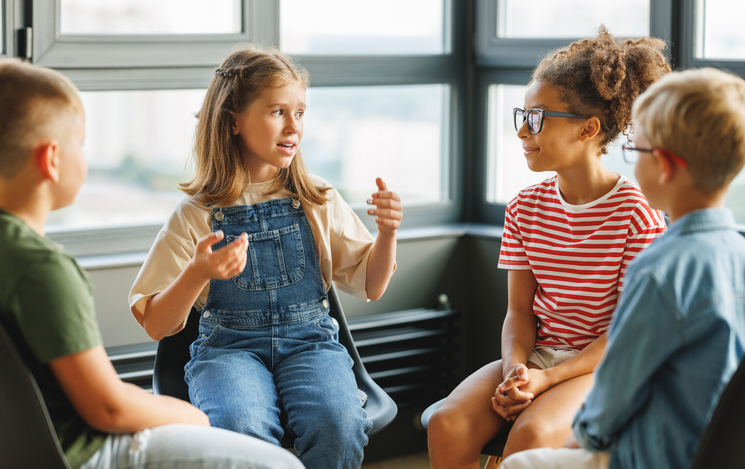
As a child moves into middle childhood they develop friendships while also learning more about social cues. It is also a time for developing an increased sense of self along with gaining insight into what is right or wrong within peer friendships. Thus, it is critical that parents and caregivers establish time and space to connect with children this age. Families live busy lives and when parents create opportunities to bond with their children, they help them to better share what they may be experiencing or feeling.
Of course a child’s self-esteem can also be fortified through validation, praise and feedback from their parents. During even the most difficult discussions, ensuring that parental expression includes strength-based, non-judgmental phrasing is helpful in allowing children to feel encouraged and understood. In taking a mindfulness approach as a parent, we can also assist kids in middle childhood with learning and developing skills around self-compassion. Self-compassion empowers children so they can navigate setbacks such as failing a test or not being chosen for a sports team. When children are able to discuss their experiences and share feelings with their caregivers they generally gain increased confidence and feel safer with expressing themselves. More specifically, when discussing how school might be ‘feeling,’ whether with friendships, teachers or classroom lessons, mindfulness skills provide valuable means of helping kids create emotional well-being.
Parents have an important role to play even as children grow more independent, and being an attentive listener ensures that we are truly connecting with our children, even while we might be deciphering what they are saying. Attentively listening means prioritizing exchanges with our kids by placing our laptops, cell phones, and cooking utensils aside to provide our full attention. When parents can employ such methods consistently, the results are generally a more connected parent and child. In this way, well-being in the household becomes the norm.
Final Thoughts
The wisdom of Carl Jung to “look inside,” is as important as ever in today’s tumultuous world. It is never too early (or too late, really) to learn to slow down, to stay in the moment and to pay attention to the mind and body without judgment. By understanding the hallmarks of each developmental stage, parents can work with their children to practice mindfulness in ways that are both practical and enjoyable.
Mindfulness practice helps children to form strong identities, gain deep understanding of their thoughts and feelings, and provides for a greater sense of empathy. It also helps cultivate self-compassion and patience, offering kids meaningful methods for handling challenges that come their way. As children learn to see the bigger picture of life they learn to focus on what is within their control rather than what is not. Modeling mindfulness techniques as a parent and joining with your child as they develop their own unique practice helps children grow into comfortable, confident and authentic adults. The rewards are invaluable and lifelong.
Ari Fox, LCSW-R is the founder and director of Cope With School NYC, a child, adolescent and young adult psychotherapy practice on the Upper West Side of Manhattan. Cope With School NYC helps individuals thrive in and out of school and provides individual therapy, group therapy and support to families. The practice helps students address challenges with school, Attention Deficit Hyperactivity Disorder, learning differences, Autism Spectrum Disorder, bullying, anxiety, depression, loss, gender identity and sexuality, social challenges, trauma, grief and more. On-site mental health support for schools is also available. To learn more, visit www.copewithschoolnyc.com.
Francis Lora, LCSW-R, CFSW is a social worker and child, adolescent and adult psychotherapist at Cope With School NYC. He specializes in work with individuals with autism, Attention Hyperactivity Disorder and their families, often presenting to other professionals on the topic. Learn more about Francis’ work at: www.copewithschoolnyc.com/francis-lora
Kate Mohan, LMSW, ACHP-SW is a social worker and child, adolescent, and adult psychotherapist at Cope With School NYC. She helps individuals manage school stressors, parenting difficulties, chronic and terminal illness, grief, loss and trauma. Kate has extensive experience educating professionals about loss and bereavement. Learn more about Kate’s work here: www.copewithschoolnyc.com/kate-mohan-lmsw
Angela Mora, LMSW is a social worker and child, adolescent and adult psychotherapist at Cope With School NYC. She is adept at helping individuals manage challenging life stressors, including school anxiety, Attention Deficit Hyperactivity Disorder (ADHD), learning disabilities, Obsessive Compulsive Disorder (OCD), substance use and separation/divorce. Learn more at www.copewithschoolnyc.com/angela-mora
Karen Tsiroponas, LMSW is a social worker and child, adolescent and adult psychotherapist at Cope With School NYC. Prior to joining the practice, Karen worked for over 15 years as a school social worker for the NYC Department of Education. Karen works with individuals of all ages and specializes in school functioning, school refusal, separation, and social skills. Learn more about Karen’s work here at www.copewithschoolnyc.com/karen-tsiropinas
This article appeared in the 2025 issue of the Parents League Review. Get the current issue of the Review free with a family membership. Or purchase it separately.

Recommended Reading
-
Is Preschool the New Neighborhood?
Ann Levine, Parents League School AdvisorFor many families, preschool becomes more than a place where a young child learns. It can become a community where…
Read more
-
Best Summer Reading Books for Kids
Ann Levine, Parents League School AdvisorDip a big toe into the endless selection of shimmery, summery books, many of them hinting at care, use, and…
Read more
-
Activities for learning about springtime
Here are ways to encourage children to notice the growth and change taking place all around them.
Read more